Machine Specification
| Specification |
Details |
| Ink Type |
Gravure Solvent-based Reverse Printing Lamination Inks |
| Key Substrates |
Chemically or Corona Treated Polyester Film (Min. 38 dyne/cm), Treated BOPP Film |
| Printability |
Excellent printability and re-solubility, ensuring smooth runs |
| Press Speed |
Suitable for a wide range of speeds from 50 M/Min to 150 M/Min |
| Viscosity |
15-20 seconds in Zahn Cup B3 at 25°C |
| Solid Content |
25-30% |
| Reducer |
Toluene |
| Retarder |
n-Butanol |
| Accelerator |
Ethyl Acetate |
| Storage |
Store in a cool, dry, and well-ventilated area |
Reverse-print lamination for food packaging
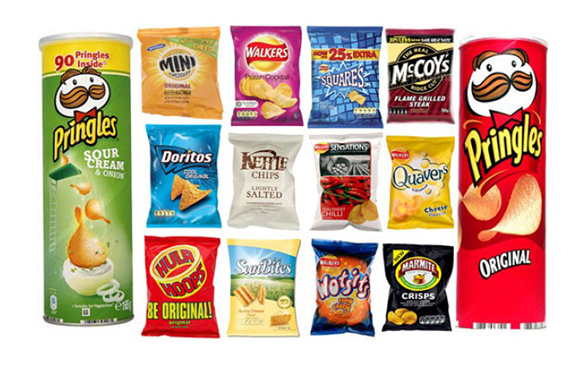
Modern food packaging in Bangladesh follows a standard structure: two films laminated together (typically BOPP on the outside for graphics and metallised PET or LDPE on the inside for barrier). The printed graphic sits between the two films, protected from abrasion and moisture. The ink used for this application has to bond to the film, stay stable under lamination adhesive, and meet food-contact migration compliance because the film-and-ink structure is packaged next to food.
Chemi Lam is formulated specifically for this reverse-print food-lamination workflow. It gives clean printing on BOPP, PET and polyester substrates, bonds reliably under polyurethane and water-based lamination adhesives, and meets migration compliance for the food categories it is designed for.
Applications
The primary market is snack and biscuit packaging (a very large domestic category — Pran, Olympic, Bombay Sweets, plus imported-brand contract packaging), dry-food packets (spices, tea, coffee, instant food pre-pack), noodle and pasta packaging, and specialty food pouches. Bangladesh’s food-packaging converter sector has grown significantly with the domestic FMCG expansion and Chemi Lam is one of the standard inks for this category.
For converters producing under contract for named food brands, Chemi Lam gives predictable retail-quality output and passes brand compliance testing — cutting the batch-approval cycle compared to generic-brand food-lamination inks.
Frequently Asked Questions
What films does this ink work with?
BOPP, PET and polyester food-grade films used in modern lamination workflows. It is optimised for reverse-print application, not surface printing.
Is it food-contact compliant?
Yes — meets standard migration limits for laminated food packaging when used correctly with approved substrate and adhesive combinations. Compliance documents supplied on request.
Is it compatible with standard lamination adhesives?
Yes — works with polyurethane and water-based lamination adhesives commonly used in Bangladesh’s food-packaging converter industry. No delamination or edge-lift issues under standard shelf conditions.
What printing method works best?
Roto-gravure gives the sharpest graphics and is standard for high-end brand food packaging. Flexographic works for higher-volume standard applications. Both are supported.
How long does the print stay stable in the finished food pack?
Because the print is sandwiched between two films in a laminated structure, it is fully protected. Effective visual life matches the food product’s shelf life — typically 6–24 months depending on product category.
What is the delivery time in Bangladesh?
Standard colours ship within 3–7 days from Dhaka. Custom brand-specification colours from Chemicoat take 30–45 days.