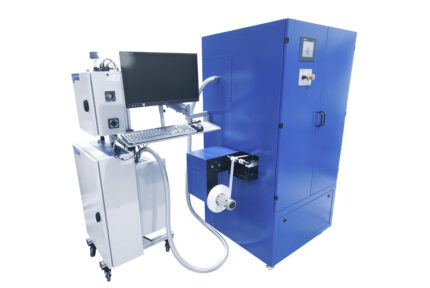
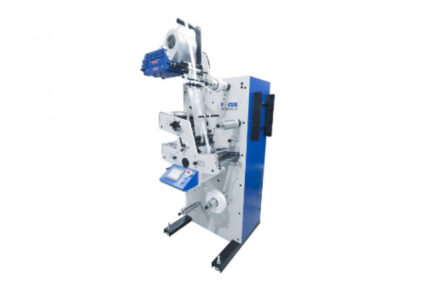
Machine Specification
| Drive System |
Sevo Technology, PLC Programmable |
| Print System |
Silk Screen |
| Print Length |
350mm, PLC Programmable |
| Print Width |
250mm |
| Print Heads |
270mm |
| Max Speed |
12Mts/min |
| Average Speed |
10Mts/min |
| Second Pass/Auto Register |
Yes |
| Photo Eye Registration |
Yes |
| Hole Punch Registration |
Yes |
| Powder Adhesive Application |
Yes |
| Adhesive Auto Recycle |
Yes |
| Drying System |
Yes, IR Drying with Recirculation Fans |
| Drying Length |
Variable,12Mts to 25Mts |
| Auto Temp Control |
Yes, Programmable Thermostatically Controlled |
| Cooling System |
Yes |
| Auto Unwind |
Yes |
| Splice Table |
Yes |
| Rewind |
1 or 2, 2nd Rewind Option |
| Slitting |
Yes(Knives supplied) |
| Substrates |
Paper or Film, Pre-Coated (Cold or Hot Peel), Details on Request |
| Adhesive |
Power, Details on Request |
| Printing Inks |
Water/Solvent, Detail on Request |
Where screen printing still beats flexo and digital for tags
Label converters have three technology choices, and each wins in a different place. Digital wins on short runs and variable data. Flexo wins on multi-colour process work at volume. Screen printing wins on ink opacity and unit cost for large runs of a single design — the ink deposit is much heavier than flexo, which matters for solid colour blocks and for white ink on dark substrates.
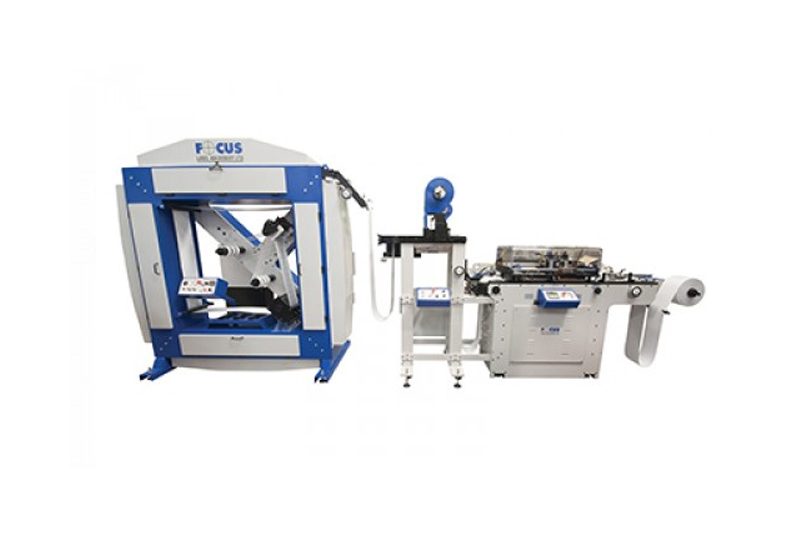
For Bangladesh label converters, the high-volume repeat label is the core of the business: one brand label design, printed in hundreds of thousands, for a garment factory running the same style all season. The Tagtrans is built for exactly that work. Where flexo would struggle to lay down enough ink for a solid dense mark, screen printing does it easily and at lower cost per tag.
Applications
Label converters serving RMG factories use the Tagtrans for high-volume brand labels, care labels and printed ribbon where a single design repeats across very large quantities. Garment groups printing in-house use it for their standard label lines while routing short-run and variable-data work to digital equipment.
It complements our d-Tex Digital Printing Machine, which covers short runs and variable data, and the Focus LX Letterflex for multi-colour flexo work. A converter with a broad customer base typically needs more than one technology, and Prominent Tec can quote them together.
Explore related equipment and supplies: Focus LX Letterflex – Flexographic Printing Machine, d-Tex Digital Printing Machine, Hot Transfer Ribbon Printing Machine.
Frequently Asked Questions
When should I use screen printing rather than flexo or digital for tags?
Screen wins when you need dense opaque ink — solid colour blocks, white on dark substrate — and when you are printing large quantities of a single design. Digital wins on short runs and variable data. Flexo wins on multi-colour process work at volume.
What substrates does the Tagtrans print on?
Textile tags, ribbons and label substrates including satin and woven tape. Confirm your specific material mix with our sales team at quotation.
How does unit cost compare with the d-Tex digital machine?
On large single-design runs, screen printing is substantially cheaper per tag because there is no per-unit imaging cost. On short runs the digital machine wins because screen printing carries screen preparation cost per design.
Does it print white ink on dark tags?
Yes — and this is one of the main reasons to choose screen over flexo. The heavier ink deposit gives dense opaque white that flexo struggles to match on dark substrates.
Is local service available in Bangladesh?
Yes — Prominent Tec is the authorised Focus Label distributor, with installation, operator training, locally stocked spares and service engineers in Dhaka.
What is the delivery and installation timeline?
Typically 30–45 days from order confirmation to Chittagong port, plus 10–14 days for inland transport, installation, commissioning and operator training.