Machine Specification
| Specification |
Details |
| Ink Type |
Water based hydrochromic ink |
| Appearance |
White color ink when it gets dry |
| Viscosity |
30,000 – 40,000 mPa-s (Thixotropic) |
| Screen board suggestion |
100 – 150 Mesh |
| Peel Type |
Cold Peel Only (to prevent ink splitting) |
| Compliance |
ZDHC Level 3, Oeko-Tex Standard 100, PVC-Free |
What hydrochromic ink is used for
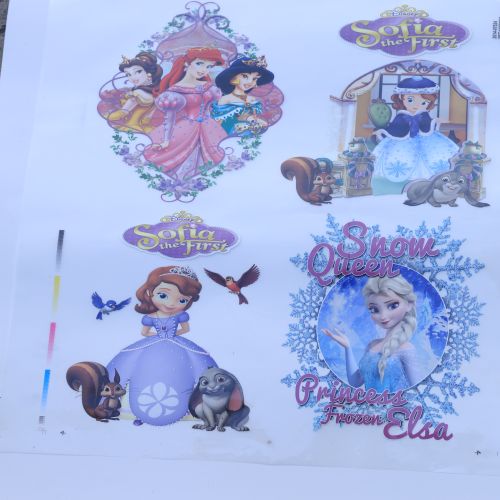
Bangladesh printers use hydrochromic ink for three main markets. First, children’s apparel — colour-changing designs on T-shirts and rain jackets that appear when wet (rainy-day umbrellas that show cartoons, T-shirts that reveal designs in the shower). Second, promotional merchandise — brand launches and product campaigns where the reveal effect is the marketing hook (a T-shirt that reveals a QR code when heated is a common promotional format).
Third, novelty textile printing for the domestic retail market — Eid, wedding, and festival apparel where the reveal effect is part of the fashion appeal. It is not a high-volume ink — annual demand across Bangladesh is measured in tens of kilos, not tonnes — but it commands premium pricing and gives a differentiated product line.
Applications
Children’s apparel brands and export contract printers use this ink for rainy-day themed clothing, bath towels and swimwear where the reveal effect is the product feature. Promotional agencies running brand campaigns use it for launch merchandise — the reveal design is memorable and shareable. Retail fashion brands use it for limited-edition festival collections.
For any printer looking to add a specialty product line without a large capex — hydrochromic ink runs on standard heat-transfer equipment already in the workshop — this ink opens a niche market with margins several times higher than standard textile printing.
Related equipment and supplies: Water Based Heat Transfer Ink, Sublimation Printing Ink, Water Based Pyrography Ink.
Frequently Asked Questions
Is the colour change reversible?
Yes — the hidden-to-visible transition reverses when the activation condition (water or heat) is removed. The garment can be activated and deactivated many times over its life.
What triggers the colour change — heat or water?
This ink is water-activated (hydrochromic). We also stock thermochromic versions that activate at specific temperature thresholds — talk to us if you need the heat-activated version instead.
Is this ink safe for children’s clothing?
Yes — Öko-Tex Standard 100 compliant and skin-safe. It is one of the most common Bangladesh applications for this ink.
How is it applied to garments?
As a heat-transfer print. The ink is printed onto transfer paper or film, then heat-pressed onto the garment using standard heat-transfer equipment already common in Bangladesh printing workshops.
How long does the colour-change effect last on a garment?
Typically 20–30 washes before the effect starts to weaken. Recommended wash instructions (inside-out, gentle cycle, no bleach) extend the life significantly.
What is the minimum order quantity?
Standard MOQ is 1 kg per colour combination — enough for approximately 500–1000 medium-size T-shirt prints depending on design size. Smaller sample quantities available for first-time trials.