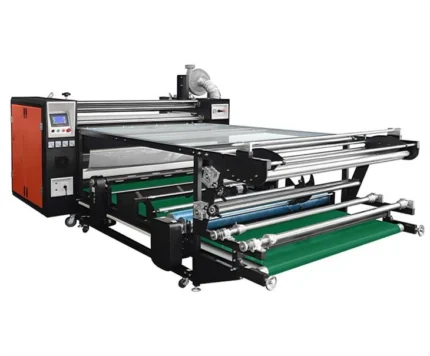
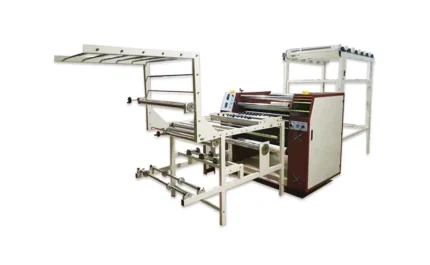
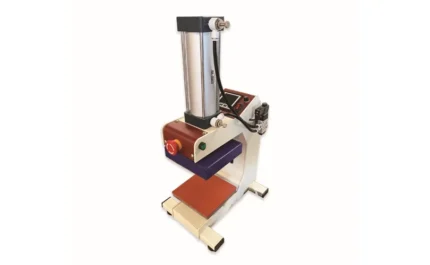
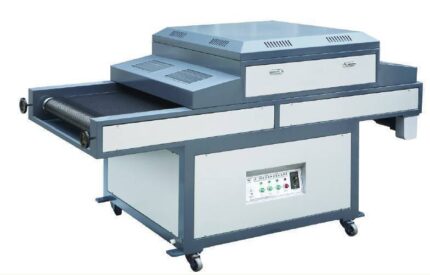
Machine Specification
| Model |
Printing Area |
Temperature Range |
Voltage/Power |
G.W. |
Packing Size(mm) |
| PT-J501 |
400*500mm |
0-260℃ |
220V/3KW |
98 |
1050*750*700 |
| PT-J502 |
400*600mm |
0-260℃ |
220V/3.5KW |
104 |
1250*750*700 |
| PT-J503 |
500*700mm |
0-260℃ |
220V/4.5KW |
139 |
1440*800*800 |
| PT-J504 |
400*500mm |
0-260℃ |
380V/3KW |
600 |
1500*800*1700 |
| PT-J505 |
500*700mm |
0-260℃ |
380V/4.5KW |
780 |
1600*900*1700 |
| PT-J506 |
600*800mm |
0-260℃ |
380V/6KW |
600 |
1500*800*1700 |
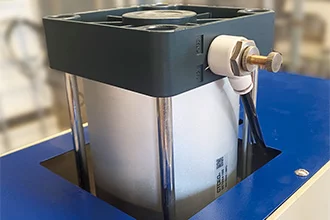
When pneumatic pressure is not enough
Most garment heat pressing works fine on pneumatic pressure. Heavy materials do not. Thick canvas, workwear fabric, industrial webbing, multi-layer technical textiles and heavy denim need more force than an air cylinder practically delivers, and the result of under-pressure is a transfer that lifts at the edges after a few washes.
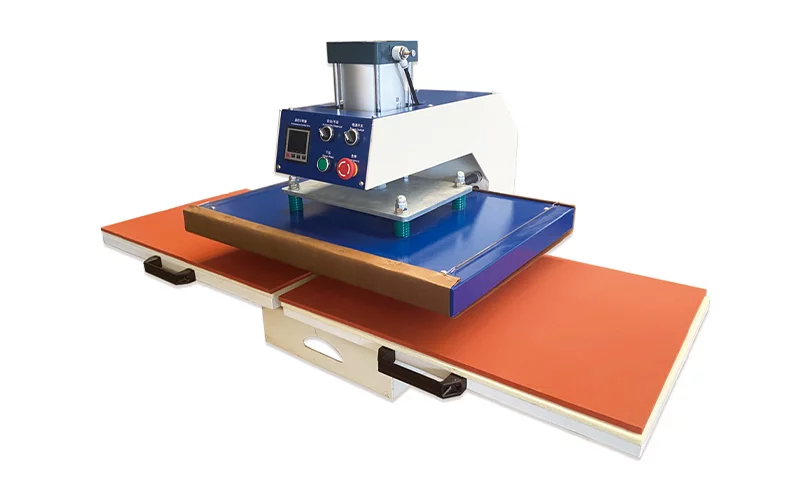
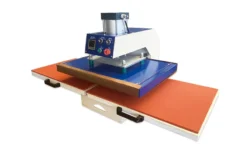
Hydraulic pressure solves this. It also holds pressure more steadily through the cycle, which matters on thick materials that compress during pressing. The sliding lower platen is a safety and ergonomics feature: the operator loads the platen fully clear of the heated head, then slides it under to press — worth having on any press running continuously through a shift.
Applications
Workwear and industrial garment manufacturers use hydraulic presses for branding on heavy canvas and technical fabric. Denim producers use them for transfers and finishes on heavy denim. Technical textile manufacturers use them for multi-layer materials and industrial webbing where pneumatic pressure falls short.
It complements our standard and large-format garment presses — factories with mixed work run pneumatic or standard presses for regular garments and a hydraulic press for the heavy material that needs it. It also works with DTF transfers from our DTF Printer on heavier substrates.
Explore related equipment and supplies: Semi Automatic Double Position Large Heat Press Machine, Automatic Double Station Heat Transfer Printing Press Machine, Semi Automatic Garment Embossing Machine.
Frequently Asked Questions
When do I actually need hydraulic rather than pneumatic?
When your material is thick or dense enough that pneumatic pressure gives incomplete transfer — heavy canvas, workwear fabric, industrial webbing, multi-layer technical textiles, heavy denim. For standard T-shirt and polo work, pneumatic is sufficient and cheaper.
What is the benefit of the sliding platen?
Safety and ergonomics. The operator loads the lower platen while it is fully clear of the heated head, then slides it under to press. On a press running all shift, that reduces both burn risk and operator fatigue.
What materials can it press?
Heavy canvas, workwear fabric, industrial webbing, technical textiles, heavy denim and standard garments. Settings vary by material and are covered in operator training.
Is the pressure adjustable?
Yes — hydraulic pressure is set to the value your material needs. Too much pressure damages some materials, so correct setting per material is part of the operator training.
What power supply and maintenance does it need?
Three-phase industrial supply, with rating supplied at quotation. Hydraulic systems need periodic fluid and seal checks, which are covered in the maintenance training at installation.
What is the delivery and installation timeline?
30–45 days from order confirmation to Chittagong port, plus 7–10 days for inland transport, installation, electrical connection and operator training.