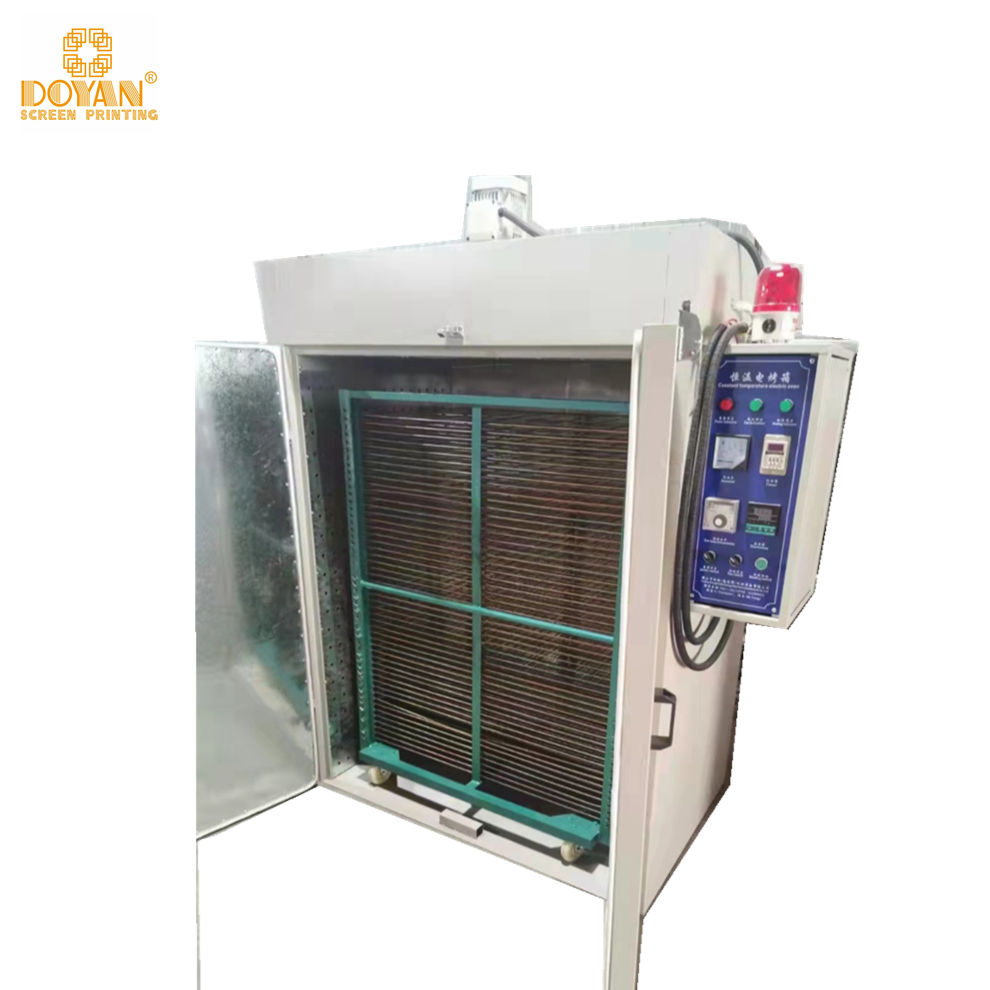
Machine Specification
| Model |
Inner Size(W*DH) |
Outer Size(W*DH) |
Inner Temperature |
Cotton Insulation |
Voltage Power |
| PT-C4 |
1200*850*1550mm |
1050*1720*2200mm |
0-250℃ |
80K*100mm |
380V/14KW |
Where an industrial oven earns its place
The clearest use case in Bangladesh right now is DTF production. A DTF printer produces film transfers coated in adhesive powder, and that powder must be cured at controlled temperature before the transfer can be pressed onto a garment. Small operations cure with a heat gun or by hovering a heat press, both of which give uneven results and limit throughput. An oven cures a full batch at a consistent temperature, which is what makes DTF viable at production volume.
Beyond DTF, garment factories use industrial ovens for heat setting fabric, curing coated components and drying parts where consistent controlled heat matters. The insulation grade is worth attention — better insulation means lower electricity consumption per hour, which on a machine that runs most of the day adds up meaningfully in Bangladesh operating costs.
Applications
DTF print operations use these ovens for batch curing adhesive powder on film transfers — the step between printing and heat pressing. Garment factories use them for heat setting fabrics and curing treated materials. Light industrial manufacturers use them for drying coated parts and components where a controlled temperature profile is needed.
The oven is the natural companion to our DTF Printer, and workshops scaling DTF production usually buy both together. It also supports the finishing workflow alongside our tunnel dryers and heat presses where controlled batch heat is needed rather than continuous conveyor curing.
Frequently Asked Questions
What temperature does DTF powder curing need?
Typically around 110–130°C for a couple of minutes, though it varies by powder type. The oven’s controlled temperature and even distribution give far more consistent results than heat-gun curing, which is what makes batch DTF production practical.
What is the maximum operating temperature?
Up to 250°C, which covers DTF curing, textile heat setting and most light industrial drying and curing processes.
How much electricity does it use?
Consumption depends on chamber size, operating temperature and insulation grade. The rating is supplied with the quotation so you can plan the electrical supply and estimate running cost before ordering.
How many trays or what batch size does it hold?
Depends on the chamber size specified. Tell our sales team your target batch volume — for example transfers cured per hour — and we will recommend the right chamber size.
Does it have safety features for unattended operation?
It includes an over-temperature cutoff. As with any industrial heating equipment, follow standard workshop safety practice and do not leave it running unattended outside working hours.
What is the delivery timeline in Bangladesh?
30–45 days from order confirmation to Chittagong port, plus 5–7 days for inland transport and installation including electrical connection and calibration.