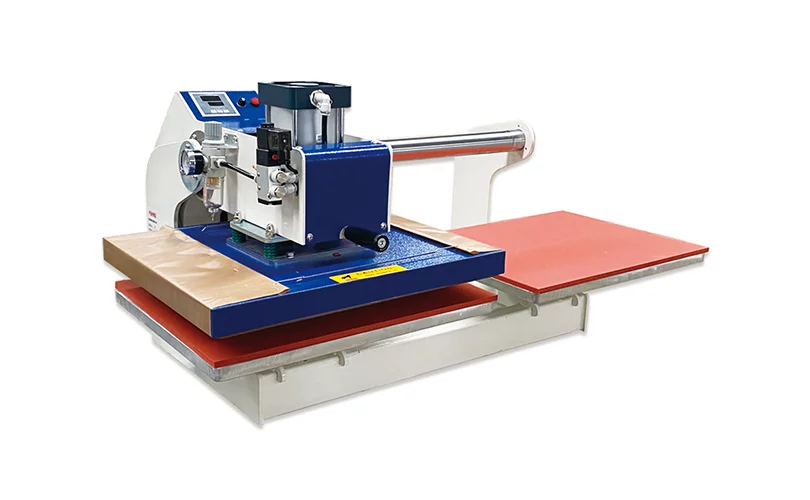
| Attribute |
HJD-E401 |
HJD-E402 |
| Model |
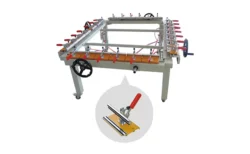
PT-E4 Chain Wheel Screen Stretching Machine |
PTE4 Chain Wheel Screen Stretching Machine |
| Mechanism Type |
Manual Chain & Hand Wheel Operation |
Manual Chain & Hand Wheel Operation |
| Max. Stretching Area |
900 x 1200 mm |
1200 x 1500 mm |
| Maximum Tension |
30N |
30N |
| Core Components |
Chain Drive System, Pneumatic Mesh Assist |
Chain Drive System, Pneumatic Mesh Assist |
| Net Weight |
175 kg |
195 kg |
Chain wheel or pneumatic — which stretcher to buy
Screen tension decides print quality. Under-tensioned mesh flexes during the squeegee stroke, which blurs detail and throws off registration on multi-colour work. Hand-stretched screens are almost always uneven — tighter on one side than the other — and the difference gets worse as the mesh relaxes over the first few hours.
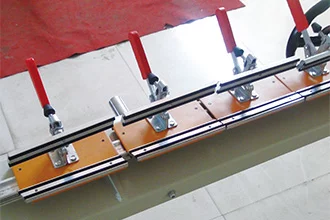
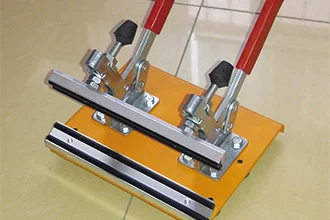
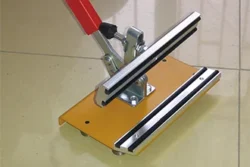
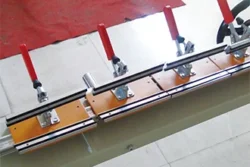
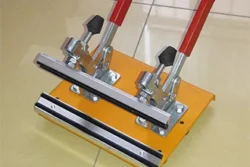
Chain wheel stretchers are the mechanical answer: four-sided clamps tightened by chain wheels, giving even, repeatable tension you can verify with a tension meter. They cost less than pneumatic stretchers, need no compressed air line, and have very little to go wrong. The trade-off is that tensioning takes a few minutes of manual work per frame. Our Automatic Mesh Stretching Machine is the pneumatic alternative if you are stretching many frames daily or need the tightest possible tolerance for four-colour registration work.
Applications in Bangladesh
Screen printing workshops across Dhaka, Narayanganj and Gazipur use chain wheel stretchers as their standard frame-preparation equipment. Garment printers stretching mesh for T-shirt work, fabric printers running large-format screens, and label printers using fine mesh all rely on the same tension consistency. Workshops that re-mesh their own frames rather than buying pre-stretched screens save substantially per frame.
The machine sits at the start of the screen preparation workflow, ahead of the Automatic Emulsion Coating Machine and the exposure step. Workshops setting up a screen room usually buy the stretcher, coater, dryer and exposure unit as a group, and Prominent Tec can quote them together.
Frequently Asked Questions
What tension should I stretch textile printing screens to?
For standard garment and textile printing, 18–25 N/cm is the usual working range. Finer detail and multi-colour registration work sits at the higher end. We recommend using a tension meter to verify rather than judging by feel.
Is a chain wheel stretcher better than a pneumatic one?
Neither is better outright. Chain wheel costs less, needs no compressor and is nearly maintenance-free, but takes a few minutes of manual work per frame. Pneumatic is faster and holds tighter tolerance, which matters at high frame volumes or for precise four-colour registration. Our Automatic Mesh Stretching Machine is the pneumatic option.
What frame sizes does it handle?
Up to 3200mm, which covers large-format textile and fabric printing frames. Smaller frames clamp without any adjustment to the machine.
Can I use it with both aluminium and steel frames?
Yes — the clamps accommodate both. Aluminium frames are more common in Bangladesh garment workshops because of weight, but the machine handles either.
What is the delivery timeline to Bangladesh?
30–45 days from order confirmation to Chittagong port, plus 5–7 days inland transport and installation. Stock availability sometimes allows faster delivery — check with our sales team.
How long does it take to stretch one frame?
Typically 5–10 minutes per frame including mounting, tensioning and gluing, depending on frame size and operator experience. Allow extra time for the mesh to relax and a second tensioning pass on precision work.